Staffordshire's highest rated dental practice - we guarantee the best quality dental care at great prices! Full range of dental care available - we can do everything under one roof!



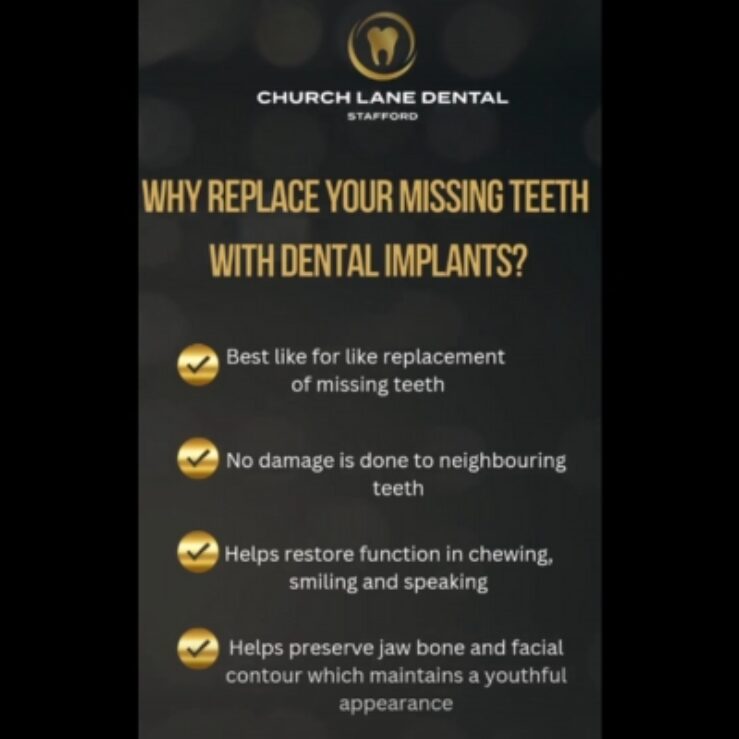
A missing tooth can affect far more than a photograph. You may avoid certain foods, cover your mouth when you laugh or find yourself conscious of a gap every time you speak. Dental implants offer a fixed, natural-looking way to replace one tooth, several teeth or a full arch, helping you eat, talk and smile with greater confidence again.
Unlike a removable denture, an implant is designed to sit securely in the jaw. It can feel remarkably close to having your own tooth back, but the right result depends on careful planning, healthy tissues and a treatment plan built around you.
A dental implant is a small titanium post placed into the jawbone to replace the root of a missing tooth. Over time, the bone heals around it in a process called osseointegration. Once the implant is stable, it can support a custom-made crown, bridge or denture.
The visible tooth is created to match your smile in shape, shade and proportion. For a single missing tooth, this is usually an implant crown. Where several teeth are missing, implants can support a bridge without relying on neighbouring healthy teeth. For people who struggle with a loose full denture, a small number of strategically placed implants can make a major difference to stability.
That distinction matters. A denture sits on the gums and can move under pressure. An implant-supported restoration is anchored to the jaw, allowing biting forces to be distributed more like a natural tooth. It is not the answer for every situation, but it is often the closest replacement option to a natural tooth.
Implants can be considered after tooth loss caused by decay, gum disease, trauma or a failed tooth that cannot be saved. Some patients want to replace a gap that has bothered them for years. Others need a clear plan after an extraction, particularly in a visible area of the smile.
The best candidates are not defined by age alone. What matters most is your general health, the health of your gums, the amount and quality of jawbone available, and your ability to maintain excellent oral hygiene. Many adults who assume they have been without a tooth for too long are still suitable for treatment. Equally, someone with an apparently straightforward gap may need gum treatment or bone grafting first.
Smoking, uncontrolled diabetes and active gum disease can affect healing and long-term implant success. This does not always rule treatment out, but it needs an honest discussion. A good implant consultation should never be a one-size-fits-all sales conversation. It should identify the cause of the lost tooth, assess the surrounding teeth and gums, and explain the options clearly.
In selected cases, an implant may be placed at the same appointment as an extraction. This can reduce the number of surgical stages and may help preserve the shape of the gum and bone. However, immediate placement is not automatically better.
An infected site, limited bone or the need for a more predictable cosmetic result may mean allowing the area to heal first. Your clinician will recommend the timing that gives your smile the strongest long-term foundation, rather than rushing a result that could compromise it later.
Treatment begins with a detailed consultation. This includes an examination of your teeth and gums, a conversation about your medical history and goals, and digital imaging. A 3D scan is particularly valuable because it shows the height and width of the bone, as well as the position of nerves and sinuses. It allows the implant to be planned precisely before treatment starts.
If an implant is suitable, the next step is placement. The area is fully numbed with local anaesthetic, and sedation may be available for patients who feel anxious about dental treatment. The implant is placed carefully into the jawbone through the gum. Most people are surprised by how manageable the appointment feels, particularly when they have been worried about the word “surgery”.
After placement, the implant needs time to integrate with the bone. Healing times vary, but several months is common. You may have a temporary tooth during this period, especially if the gap is visible. Once the implant is ready, the final crown, bridge or denture is designed and fitted.
For more complex cases, the process can involve additional stages. A bone graft may be needed where bone volume has reduced after tooth loss. In the upper jaw, a sinus lift may occasionally create the space needed for secure implant placement. These procedures can extend treatment time, but they may also make a stable, long-lasting result possible.
It is normal to experience some tenderness, mild swelling or bruising after implant placement. This is usually most noticeable in the first few days and is often managed with standard pain relief, a softer diet and careful cleaning around the area. Your dentist will give you personalised aftercare instructions and tell you what to expect.
Most patients return to everyday activities quickly, although strenuous exercise and smoking should be avoided in the early healing period. The key is to protect the site while it heals. Do not test a new implant by biting hard foods before you have been advised it is safe to do so.
If you develop increasing pain, persistent bleeding, swelling that worsens after a few days, or feel unwell, contact your dental practice promptly. Dental concerns do not always wait for weekday hours, which is why access to urgent advice and appointments matters.
With good care, implants can last for many years and often much longer. The implant itself is highly durable, while the crown or bridge attached to it may eventually need repair or replacement because it experiences daily wear. Longevity depends on the quality of the original treatment, your bite, gum health and the care you give your mouth afterwards.
Implants cannot get decay, but the gums and bone around them can become inflamed. This is known as peri-implant disease. It is preventable in many cases through effective brushing, cleaning between the teeth, regular hygiene visits and routine dental checks.
If you clench or grind your teeth, a night guard may protect both your implant restoration and your natural teeth. Small habits matter. Using teeth to open packaging, biting ice or skipping check-ups can place unnecessary stress on even the most carefully made restoration.
There is no single “best” way to replace a tooth. An implant preserves neighbouring teeth because they do not need to be filed down to hold a conventional bridge. It also helps maintain the bone in the area, as the jaw receives stimulation through the implant.
A bridge can be a good solution when an implant is not suitable, when treatment needs to be completed more quickly, or when cost is a deciding factor. A removable denture can replace several teeth at a lower initial cost and may be appropriate where surgery is not wanted or advised. Modern dentures can look excellent, though stability varies from person to person.
The decision should balance clinical suitability, appearance, comfort, treatment time and budget. Ask to see the full plan, including any preparatory work, temporary teeth, follow-up visits and future maintenance. Transparent conversations at the start make it easier to choose with confidence.
The success of implant treatment is not just about placing a titanium post. It is about creating a tooth that sits comfortably within your bite, supports the gums attractively and works with the rest of your smile. That takes planning, skill and the right materials.
At Church Lane Dental, implant care can be planned as part of your wider dental health, from treating gum concerns and replacing a failing tooth to refining the final smile with whitening or other cosmetic treatment where appropriate. For nervous patients, clear explanations and sedation options can turn a long-postponed decision into a calm, supported experience.
A gap in your smile does not have to become something you simply learn to live with. Start with a proper assessment, ask the questions that matter to you, and choose a plan that protects both your comfort now and your smile for years ahead.
Back to blog
Quickly match your needs with the right dental treatment using our simple treatment finder.
Have questions or ready to book? Reach out, and our team will guide you every step of the way.


Follow us on Instagram for real patient transformations, behind the scenes updates and the latest offers. It’s the easiest way to stay connected and inspired on your smile journey.
EXPLORE