Staffordshire's highest rated dental practice - we guarantee the best quality dental care at great prices! Full range of dental care available - we can do everything under one roof!



A small chip on a front tooth can make you hide your smile in photographs. So can uneven edges, stubborn discolouration or gaps that whitening alone cannot change. When comparing porcelain versus composite veneers, the right answer is rarely about choosing the most expensive option. It is about matching the treatment to your teeth, your priorities and the result you want to see every day.
Both treatments can create a brighter, more balanced smile. Both need careful planning and skilled dentistry. Yet they differ in the way they are made, how long they last, the amount of preparation involved and the investment required. A consultation gives you the opportunity to see what is realistically possible before making a decision.
A veneer is a fine covering placed over the front surface of a tooth to improve its shape, colour or position. Porcelain veneers are individually made in a dental laboratory and then bonded to the teeth. Composite veneers are shaped directly onto the tooth using tooth-coloured resin, often during a single appointment.
Porcelain has a glass-like finish that reflects light in a way that closely resembles natural enamel. It is highly stain resistant and keeps its colour well. Composite is more adaptable during treatment and can be added, shaped and polished chairside. It can look beautifully natural, particularly where only subtle correction is needed, but it is more likely to pick up staining and wear over time.
Neither is automatically the better treatment. A patient looking to refine one chipped tooth may be ideally suited to composite bonding. Someone seeking a long-lasting transformation across several visible teeth may prefer porcelain. Your natural tooth colour, bite, gum health and habits all matter as much as the material itself.
Porcelain veneers are often chosen for their polish, durability and ability to create consistent results across the smile. Each veneer is custom-made to the agreed shape and shade, allowing for fine control over details such as translucency, surface texture and symmetry.
They are particularly effective for teeth with deep staining that does not respond fully to whitening, worn or uneven edges, old restorations, small gaps and mild cosmetic irregularities. Because porcelain resists stains better than composite, it can be a strong choice for people who enjoy tea, coffee, red wine or richly coloured foods and want their smile to stay bright with routine care.
Treatment usually takes place over more than one appointment. After planning the desired look, the dentist may prepare a very small amount of enamel to make room for the veneer. This varies from case to case. Some conservative porcelain treatments need minimal preparation, while others require a little more to achieve a natural contour rather than a bulky appearance.
Once enamel has been removed, that tooth will always need a veneer or another restoration in the future. This is an important consideration, not a reason to avoid porcelain altogether. It simply means the decision should be made with a clear understanding of the long-term commitment.
With excellent oral hygiene, regular dental reviews and sensible care, porcelain veneers can last for many years. They are not indestructible: biting fingernails, opening packaging with your teeth or clenching and grinding can cause damage. If you grind your teeth, a protective night guard may be recommended to protect both your veneers and natural enamel.
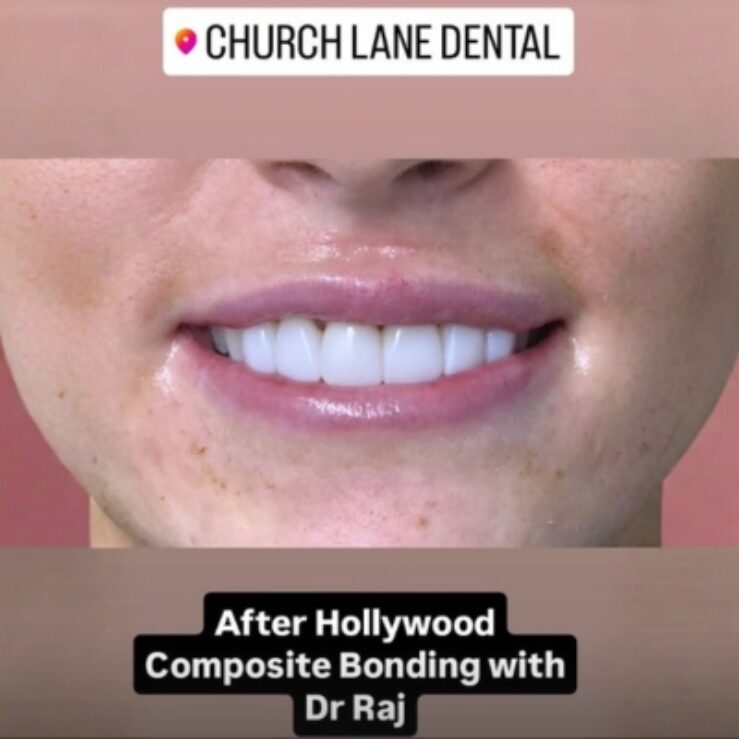
Composite veneers, often described as composite bonding, involve applying layers of tooth-coloured resin directly to the tooth. The dentist sculpts the material by hand, hardens it with a curing light and polishes it to a smooth finish. In suitable cases, treatment can be completed in one visit.
The greatest advantage is conservatism. Composite can often be placed with little or no drilling of healthy enamel. It can also be repaired more easily if it chips, which appeals to patients who want a less permanent first step in cosmetic dentistry.
Composite works especially well for minor chips, small gaps, slightly uneven edges and changing the shape of one or two teeth. It can also be a practical option when a patient wants to improve their smile now while keeping future choices open. For busy adults, completing a carefully planned enhancement in a single appointment can be a real benefit.
The trade-off is maintenance. Composite is more porous than porcelain, so it can gradually stain or lose some surface shine. It may need polishing, repair or replacement sooner, particularly for people who smoke, drink lots of staining drinks or have a heavy bite. A well-finished composite smile can still look excellent, but it requires realistic expectations and regular professional care.
Porcelain generally offers the most stable, enamel-like aesthetic over the long term. It is often the preferred material where several front teeth need a consistent, highly polished finish. Composite can produce very attractive results too, although matching the light-reflecting qualities of porcelain can be more challenging in larger cosmetic cases.
Cost should be considered as part of the whole treatment plan, not as a standalone figure. Composite veneers usually have a lower initial cost because they are completed directly in the surgery and do not require laboratory work. Porcelain has a higher upfront investment, but its stain resistance and longevity may make it better value for some patients over time.
The amount of tooth preparation is equally significant. If preserving natural enamel is your main concern, composite may be the right starting point. However, porcelain can be the more predictable choice where tooth shape, colour or existing restorations mean a stronger, longer-lasting cover is needed. The goal is never to reduce healthy tooth structure unnecessarily. It is to create a result that looks natural, functions comfortably and is planned to last.
Veneers are cosmetic restorations, but they must work within a healthy bite. If your teeth meet heavily edge-to-edge, you clench or grind, or your front teeth are significantly crowded, placing veneers without addressing those issues may increase the chance of chips or fractures.
In some cases, teeth straightening is the better first move. Invisalign or fixed braces can bring teeth into a better position, reducing the amount of veneer treatment needed afterwards. Whitening may then be enough, or it can provide a brighter base shade before one or two teeth are refined with bonding or veneers.
Healthy gums are essential too. Red, swollen or bleeding gums should be treated before cosmetic work begins. Veneers frame the visible smile, but the gumline is what makes the final result look balanced and believable.
The brightest possible shade is not always the most flattering one. A natural-looking smile has subtle variation, proportion and character. During planning, your dentist should consider your skin tone, lip shape, facial features, the colour of neighbouring teeth and how much tooth shows when you speak and smile.
If you are considering whitening, it is usually best to whiten before veneers are made or composite is matched. Natural teeth can be whitened, but porcelain will not change colour once fitted. Composite also does not whiten in the same way as enamel, although it can sometimes be polished or replaced to refresh the shade.
Bring photographs if there is a particular style of smile you like, but remain open to professional guidance. The most successful veneer work does not look copied from someone else. It looks proportionate, healthy and confidently yours.
A proper consultation should be a conversation, not a sales pitch. Your dentist will examine your teeth, gums and bite, discuss what concerns you most and explain whether porcelain, composite, whitening or orthodontics would best meet your goals. Digital imaging, photographs and, where appropriate, a smile preview can help turn an idea into a treatment plan you can understand.
You should also discuss aftercare, likely maintenance, fee options and what happens if a veneer is damaged. This is particularly valuable if you are nervous about dentistry or have had previous cosmetic treatment that did not feel right. At Church Lane Dental, cosmetic plans are tailored around your smile, your timetable and the level of change you want, with clear advice at every stage.
A confident smile should not depend on a one-size-fits-all treatment. Whether porcelain offers the lasting finish you want or composite gives you the conservative change that feels right, start with a thorough assessment and choose the option that protects your teeth while helping you smile without holding back.
Back to blog
Quickly match your needs with the right dental treatment using our simple treatment finder.
Have questions or ready to book? Reach out, and our team will guide you every step of the way.


Follow us on Instagram for real patient transformations, behind the scenes updates and the latest offers. It’s the easiest way to stay connected and inspired on your smile journey.
EXPLORE