Staffordshire's highest rated dental practice - we guarantee the best quality dental care at great prices! Full range of dental care available - we can do everything under one roof!



A missing tooth can change far more than a photograph. It can make eating awkward, affect your speech, leave you hiding your smile or allow nearby teeth to drift. When comparing an implant bridge versus denture, the right answer is rarely about choosing the most expensive option. It is about finding a replacement that works for your mouth, your lifestyle, your health and the future of your smile.
Both treatments can restore appearance and function. The key difference is how they are supported: an implant bridge is fixed to dental implants placed in the jaw, while a denture is a removable appliance that sits on the gums or clips onto implants. Each has genuine advantages, and a careful clinical assessment should come before any decision.
An implant-supported bridge replaces several missing teeth using a small number of titanium implants as anchors. Once the implants have integrated with the jawbone, a bespoke bridge is secured in place. It is designed to stay put when you speak, chew and smile, and only a dentist removes it for professional maintenance.
A conventional removable denture replaces one, several or all missing teeth on a gum-coloured base. Partial dentures may use discreet clasps around remaining natural teeth. Full dentures rely on their fit against the gums, natural suction in the upper jaw and the muscles of the cheeks and tongue. They are taken out for cleaning and should not be worn overnight unless your dentist has advised otherwise.
There is also a valuable middle ground: an implant-retained denture. This remains removable, but clicks onto implants for much stronger stability than a standard denture. For many people, it offers a practical balance between improved security and a lower treatment cost than a fixed full-arch bridge.
For people who want a tooth replacement that feels closest to fixed teeth, an implant bridge is usually the stronger choice. Because it is anchored in the jaw, it will not lift, rock or move while eating. You can clean around it at home with specialist brushes and flossing aids, but it stays in place. That security can be particularly meaningful if you are replacing teeth at the front of the mouth or if a loose denture has already made you self-conscious.
Dentures have improved enormously in appearance and fit, but they still rest on soft tissue. A well-made denture should feel comfortable and look natural. Even so, it may take time to adapt to the feeling of a plate in the mouth, and certain foods can remain difficult. Lower dentures can be especially challenging because there is less surface area for them to sit on securely.
Your expectations matter here. If your priority is a removable solution that restores the look of your smile quickly, a denture may be entirely appropriate. If you want to bite with confidence and avoid taking your teeth out at night, implants may better match the way you want to live.
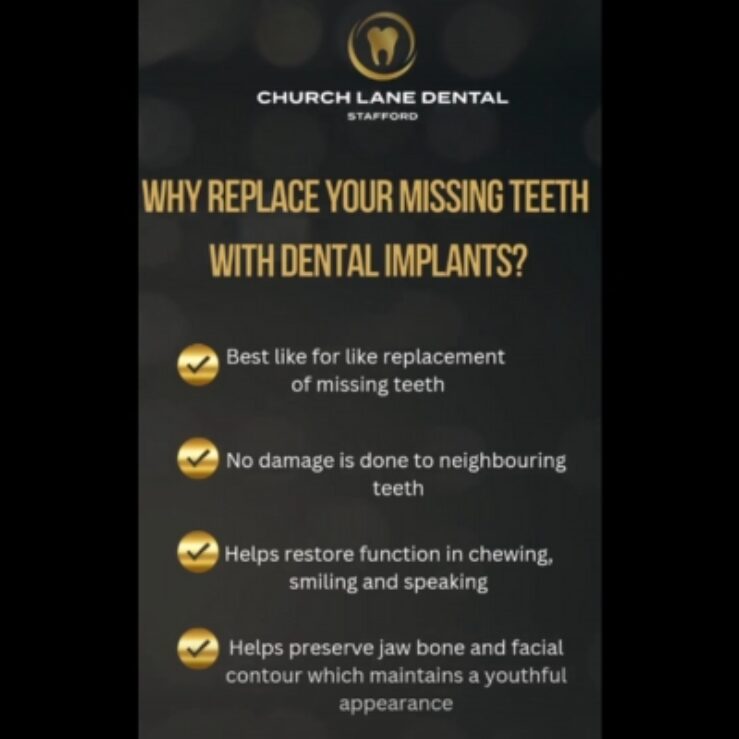
The jawbone needs stimulation from tooth roots or implants to maintain its volume. When teeth are missing, the bone beneath them gradually reduces. This can alter facial support over time and can make a denture looser as the gums and ridge change shape.
Dental implants transfer chewing forces into the jawbone, helping to preserve bone in the area around them. This is one of the most important long-term benefits of an implant bridge. It is not a guarantee that no changes will ever occur, but it provides a level of support that a conventional denture cannot.
That said, implant treatment depends on having enough healthy bone in the right position. Some patients need bone grafting before implants can be placed, which can extend the treatment journey. Gum health, smoking, uncontrolled diabetes, certain medicines and teeth grinding can also affect whether implants are suitable and how they should be planned.
A denture does not require surgery, so it can be the more straightforward route where implants are not currently advisable. It can also be a sensible temporary solution while gums heal after extractions or while a longer implant plan is being considered.
A removable denture can often be provided relatively quickly once the mouth is ready. If teeth need to be removed, an immediate denture may sometimes be fitted on the same day, so you are not left without visible teeth. As healing progresses, it will usually need adjustments and may eventually need relining or replacing because the gums and bone have changed.
An implant bridge is a more involved treatment. It starts with detailed planning, often including 3D imaging, to assess bone, bite and the ideal implant position. Implants are placed surgically, followed by a healing period while they integrate with the bone. A temporary restoration may be possible in selected cases, but it is not suitable for everyone. The final bridge is then designed around your bite, facial appearance and chosen tooth shade.
The longer timescale is a trade-off for a fixed, highly tailored result. If you are in pain, have a broken denture or need an urgent extraction, the immediate priority is to stabilise your oral health. A long-term tooth replacement plan can follow once the mouth is comfortable and healthy.
A conventional denture generally has a lower upfront cost than an implant bridge. It does not involve implant surgery, laboratory components or the same level of surgical planning. This can make it an accessible choice for patients replacing several teeth, particularly where a temporary or removable option suits their needs.
An implant bridge costs more initially because it includes implants, diagnostics, surgery, restorative work and follow-up care. However, the decision should not rest on the initial figure alone. Dentures may need periodic adjustments, relines and replacement as the mouth changes. Implants and bridges need lifelong professional reviews and careful hygiene, but can offer durable service when well maintained.
The most useful conversation is not simply, which option is cheaper? It is, which option is realistic now, and which outcome will still serve you well in five or ten years? A practice should explain the full plan, likely maintenance and available finance options clearly, without pressuring you into treatment that does not suit your priorities.
Neither choice is maintenance-free. An implant bridge needs daily cleaning around and underneath the bridge to prevent plaque build-up and inflammation. Your dentist or hygienist will show you the techniques and products that fit your restoration. Regular reviews are essential, because healthy gums and bone around implants are the foundation of long-term success.
Dentures should be removed and brushed daily with a denture brush and appropriate cleanser. They should be kept safe when not in use and soaked as advised. The gums, tongue and any remaining natural teeth still need daily cleaning too. Dentures may feel less comfortable or become unstable if they no longer fit properly, so do not try to adjust them yourself.
A fixed bridge can feel easier in social situations, while a denture may be easier to remove and inspect. The better option is the one you can genuinely look after consistently.
An implant bridge may suit you if you have several missing teeth, healthy gums, sufficient bone or are suitable for grafting, and want a fixed result with strong chewing stability. It is often a compelling option for people who are frustrated by a denture moving when they eat or talk.
A denture may suit you if you want to avoid surgery, need a quicker replacement after extractions, have medical or bone-health factors that make implants less suitable, or prefer a lower initial investment. A high-quality denture is not a second-best treatment. For the right person, it can be a comfortable, attractive and effective solution.
If you are missing all teeth in one jaw, do not assume the only choices are a full denture or a full fixed bridge. An implant-retained denture may deliver a major improvement in security with fewer implants. This is why a tailored consultation matters more than a one-size-fits-all recommendation.
The best plan begins with a full assessment of your teeth, gums, jawbone, bite and goals. At Church Lane Dental, that conversation can also take account of nervousness, time pressures and the practical need to keep treatment manageable. You should leave knowing what each option involves, what it is likely to cost, and why it has been recommended for you.
Do not let embarrassment over missing teeth delay that conversation. Whether the right next step is a carefully fitted denture, a stabilising implant-retained option or a fixed implant bridge, restoring your smile can make everyday meals, conversations and photographs feel like your own again.
Back to blog
Quickly match your needs with the right dental treatment using our simple treatment finder.
Have questions or ready to book? Reach out, and our team will guide you every step of the way.


Follow us on Instagram for real patient transformations, behind the scenes updates and the latest offers. It’s the easiest way to stay connected and inspired on your smile journey.
EXPLORE