Staffordshire's highest rated dental practice - we guarantee the best quality dental care at great prices! Full range of dental care available - we can do everything under one roof!



A smile can look healthy, straight and bright, yet still feel out of balance when a large amount of gum shows above the top teeth. If you find yourself covering your mouth in photographs or holding back a full smile, the best treatments for gummy smiles can make a meaningful difference. The key is not simply reducing visible gum. It is identifying why it shows in the first place, then choosing a treatment that looks natural, feels right and protects your long-term dental health.
A gummy smile is not a medical problem in itself. Plenty of people show more gum when they smile and are completely happy with it. Treatment is a personal choice, but it should always begin with a careful assessment of your teeth, gums, lip movement and facial proportions.
There is no one-size-fits-all answer because gummy smiles have several possible causes. In some cases, the teeth are healthy but have not fully emerged through the gum tissue. This is often called altered passive eruption, and it can make otherwise normal-sized teeth appear short or square.
For others, the upper lip lifts higher than average when smiling. A strong or hypermobile upper lip can expose more gum even when the teeth and jaw are proportionate. Tooth wear can also change the balance of the smile over time, particularly if grinding has shortened the front teeth.
Sometimes the cause lies in tooth position or the jaw itself. An upper jaw that sits lower or has grown more vertically can result in greater gum display. Orthodontic treatment may help where teeth are positioned incorrectly, while more significant skeletal differences may need a specialist approach.
This is why an assessment matters. A treatment that works beautifully for a high lip may not improve a gummy smile caused by short teeth, and a cosmetic fix can be disappointing if the underlying bite has been overlooked.
The right treatment should improve the proportions of your smile without making it look overdone. Your dentist may recommend one approach or a planned combination of treatments.
When excess gum tissue covers part of the teeth, gum contouring can reveal more of the natural tooth surface. Using precise techniques, the gumline is reshaped to create a more even, balanced frame around the teeth.
For some patients, crown lengthening is the better option. This goes beyond surface gum reshaping and may involve carefully adjusting the gum and supporting bone around the teeth to reveal a stable amount of tooth structure. It is often considered where teeth appear particularly short or where the gumline would otherwise grow back over time.
The benefit is a permanent change to the visible proportions of the teeth. Recovery is usually manageable, although your gums need time to heal before final cosmetic work such as veneers is completed. It is not the right choice where the gum display is primarily caused by lip movement or jaw position.
If your upper lip rises too far when you smile, carefully placed anti-wrinkle injections can relax the muscles that lift it. The aim is subtle: to lower the lip movement enough to reduce gum show while allowing your smile and facial expressions to remain natural.
This is one of the least invasive options and can be useful if you would like to test a change before committing to permanent treatment. Results usually develop over several days and commonly last around three to four months, so repeat appointments are needed to maintain the effect.
The trade-off is that it is temporary and technique-sensitive. Too much relaxation can affect the way the upper lip moves, which is why treatment should be provided by an experienced clinician who understands both facial aesthetics and smile design.
Orthodontic treatment can be an excellent solution when the teeth are over-erupted, protruding, crowded or sitting in a position that increases gum visibility. Invisalign aligners or fixed braces gradually move teeth into a more balanced relationship with the lips and gums. In selected cases, orthodontic planning can also help control the vertical position of the front teeth.
This route takes longer than injections or gum contouring, but it addresses tooth alignment and bite at the same time. That can make it particularly worthwhile if you already want to straighten your smile, reduce crowding or improve how your teeth meet.
Not every gummy smile can be corrected with aligners alone. If the jaw is the main cause, moving teeth without considering facial proportions may produce only a limited change. Digital scans, photographs and bite assessment help show what is realistically achievable.
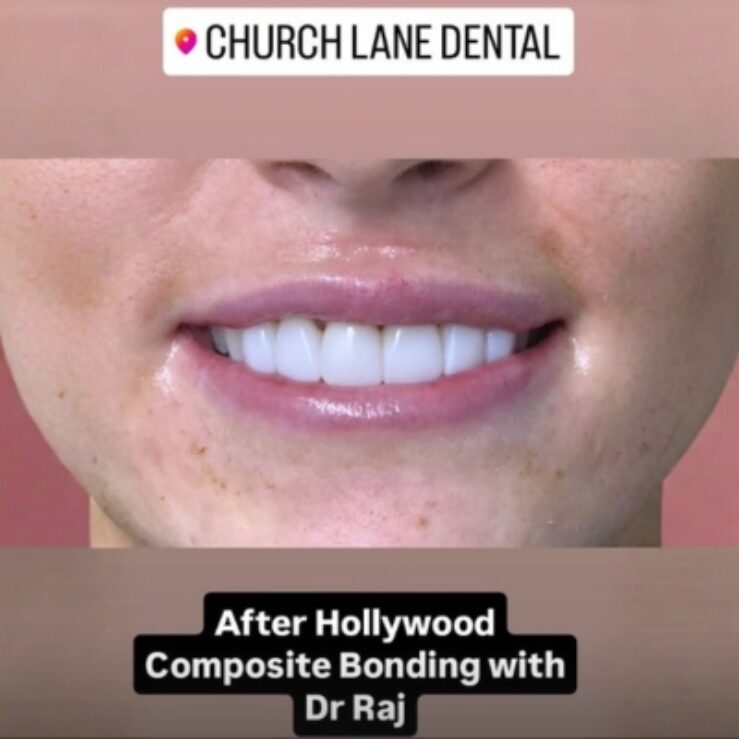
Sometimes the gums are not excessively prominent at all. The visible teeth may simply be too short because of wear, chips or naturally small proportions. Building up worn edges with composite bonding, or planning veneers in carefully selected cases, can make the teeth look longer and reduce the apparent amount of gum on show.
This approach is most effective after gum health, bite and any teeth grinding have been addressed. Adding length to teeth without protecting them from a heavy bite can lead to damage or repeated repairs. A night guard may be recommended if you clench or grind.
Veneers are not automatically the answer to a gummy smile. They can create striking results when tooth shape and colour also need improvement, but they should never be used to disguise an issue that would be better treated with orthodontics or gum contouring.
Lip repositioning is a surgical procedure that limits how far the upper lip rises when smiling. It can offer a longer-lasting alternative for people with a hypermobile upper lip who are not looking for ongoing anti-wrinkle injections.
As with any surgical treatment, suitability depends on the cause of the gum display, your lip anatomy and your expectations. There can be swelling and a recovery period, and results should be discussed carefully with a suitably qualified clinician. It is generally reserved for cases where less invasive options are unlikely to deliver the desired outcome.
Where a pronounced gummy smile is caused by the position or growth of the upper jaw, orthognathic surgery may be the most comprehensive treatment. The jaw is repositioned to improve facial balance, bite function and gum display. It is usually planned jointly by an orthodontist and a maxillofacial surgical team.
This is a significant commitment involving orthodontic preparation, hospital surgery and recovery. However, for the right patient, it can correct a skeletal issue that cosmetic treatments alone cannot resolve. A responsible consultation should be open about both the benefits and the scale of treatment involved.
The most useful question is not, “What is the quickest treatment?” It is, “What is causing my gummy smile?” A thorough consultation should examine your gum health, tooth length, bite, lip movement and the amount of gum shown at rest and when smiling. Photographs and digital scans can help you see the relationship between your teeth, gums and face before making a decision.
It is also worth being clear about what you want to change. Do you mainly want less gum show in photographs? Are your teeth worn, crooked or uneven as well? Would you prefer a temporary option first, or are you seeking a permanent result? Your answers shape the most sensible plan.
Cost, treatment time and maintenance matter too. Anti-wrinkle injections can offer a fast, temporary improvement, while Invisalign needs commitment but may improve alignment and bite. Gum contouring can be a permanent refinement, yet it will not lower a highly active upper lip. The best outcome often comes from combining treatments in the right order rather than choosing the most dramatic option.
At Church Lane Dental, a cosmetic consultation can bring the full picture into focus, from gum health and tooth proportions to orthodontic and facial aesthetic options. You should leave knowing what is possible, what is unnecessary and what each route involves before you commit.
A gummy smile does not need to be treated to be beautiful. But if it stops you smiling freely, a personalised plan can help you achieve a result that still looks unmistakably like you – just more balanced, confident and comfortable every time you smile.
Back to blog
Quickly match your needs with the right dental treatment using our simple treatment finder.
Have questions or ready to book? Reach out, and our team will guide you every step of the way.


Follow us on Instagram for real patient transformations, behind the scenes updates and the latest offers. It’s the easiest way to stay connected and inspired on your smile journey.
EXPLORE